Câu 1
1.1. TIẾNG VIỆT (30 CÂU)
Đáp án và lời giải
Đáp án: D
1.1. TIẾNG VIỆT (30 CÂU)
Đáp án: D
Đáp án: B
Quốc tộ như đằng lạc
Nam thiên lí thái bình
Vô vi cư điện các
Xứ xứ tức đao binh.
(Vận nước – Pháp Thuận)
Bài thơ được viết theo thể thơ nào?
Đáp án: C
Câu thơ sau sử dụng biện pháp nghệ thuật gì?
Ngoài thềm rơi chiếc lá đa
Tiếng rơi rất mỏng như là rơi nghiêng.
Đáp án: B
Từ nào thích hợp điền vào chỗ trống:
Anh bỗng nhớ em như đông về nhớ rét
Tình yêu ..… như cánh kiến hoa vàng.
(Tiếng hát con tàu – Chế Lan Viên)
Đáp án: C
Khăn thương nhớ ai,
Khăn rơi xuống đất,
Khăn thương nhớ ai,
Khăn vắt lên vai.
Khăn thương nhớ ai,
Khăn chùi nước mắt.
Đoạn thơ trên thuộc thể loại văn học:
Đáp án: A
Đáp án: D
Chọn từ viết đúng chính tả trong các từ sau:
Đáp án: D
Đáp án: B
Đáp án: C
Đáp án: C
Đáp án: D
“Trong hoàn cảnh “trăm dâu đổ đầu tằm”, ta càng thấy chị Dậu thật là một người phụ nữ đảm đang, tháo vát. Một mình chị phải giải quyết mọi khó khăn đột xuất của gia đình, phải đương đầu với những thế lực tàn bạo: quan lại, cường hào, địa chủ và tay sai của chúng. Chị có khóc lóc, có kêu trời, nhưng chị không nhắm mắt khoanh tay, mà tích cực tìm cách cứu được chồng ra khỏi cơn hoạn nạn. Hình ảnh chị Dậu hiện lên vững chãi như một chỗ dựa chắc chắn của cả gia đình”.
(Nguyễn Đăng Mạnh)
Nhận xét về cách thức trình bày đoạn văn:
Đáp án: B
Đầu xanh có tội tình gì
Má hồng đến quá nửa thì chưa thôi.
(Truyện Kiều, Nguyễn Du)
Từ “đầu xanh” trong đoạn thơ trên được được dùng để chỉ điều gì?
Đáp án: D
Trong các câu sau:
I. Tiếng giọt danh đổ ồ ồ, xói lên những rãnh nước sâu.
II. Hoa ban Tây Bắc nở rộ lung linh, hoa trắng núi trắng giời, hoa ban nở không kịp rụng.
III. Càng đổ dần về hướng mũi cà mau, thì sông ngòi, kênh rạch càng bủa giăng chi chít như mạng nhện.
IV. Bằng những cố gắng không ngừng, anh đã tốt nghiệp đại học.
Những câu nào mắc lỗi:
Đáp án: D
Đáp án: D
Đáp án: C
Đáp án: C
Mặt trời lên! Sáng rõ rồi mẹ ạ!
Con đi bộ đội, mẹ ở lại nhà
Giặc Pháp, Mĩ còn giết người, cướp của trên đất ta
Đuổi hết nó đi, con sẽ về trông mẹ.
(Dọn về làng – Nông Quốc Chấn)
Hình ảnh “mặt trời” trong câu thơ “Mặt trời lên! Sáng rõ rồi mẹ ạ!” mang ý nghĩa biểu tượng gì?
Đáp án: C
Đáp án: B
Đọc đoạn trích sau và trả lời các câu hỏi từ 21 đến 25:
Mỗi lần nắng mới hắt bên song,
Xao xác, gà trưa gáy não nùng,
Lòng rượi buồn theo thời dĩ vãng,
Chập chờn sống lại những ngày không.
Tôi nhớ me tôi, thuở thiếu thời
Lúc người còn sống, tôi lên mười;
Mỗi lần nắng mới reo ngoài nội,
Áo đỏ người đưa trước giậu phơi.
Hình dáng me tôi chửa xoá mờ
Hãy còn mường tượng lúc vào ra:
Nét cười đen nhánh sau tay áo
Trong ánh trưa hè trước giậu thưa.
(Nắng mới – Lưu Trọng Lư)
Đáp án: C
Đáp án: A
Người bộc lộ cảm xúc trong bài thơ là ai và được thể hiện qua từ ngữ nào?
Đáp án: D
Dòng thơ “Xao xác, gà trưa gáy não nùng” sử dụng biện pháp nghệ thuật nào?
Đáp án: C
Đáp án: A
Đọc đoạn trích sau đây và trả lời các câu hỏi từ 26 đến 30:
Thời gian chạy qua tóc mẹ
Một màu trắng đến nôn nao
Lưng mẹ cứ còng dần xuống
Cho con ngày một thêm cao.
(Trích Trong lời mẹ hát – Trương Nam Hương)
Lũ chúng tôi từ tay mẹ lớn lên
Còn những bí và bầu thì lớn xuống
Chúng mang dáng giọt mồ hôi mặn
Rỏ xuống lòng thầm lặng mẹ tôi.
(Trích Mẹ và quả – Nguyễn Khoa Điềm)
Đáp án: A
Đáp án: A
Nêu biện pháp tu từ trong câu thơ:
Thời gian chạy qua tóc mẹ
Một màu trắng đến nôn nao
Đáp án: D
Đáp án: D
Đáp án: D
1.2. TIẾNG ANH
Questions 31-35: Choose a suitable word or phrase (A, B, C, or D) to fill in each blank.
Đáp án: C
Đáp án: D
Đáp án: A
Đáp án: A
Đáp án: A
Questions 36-40: Each of the following sentences has one error (A, B, C, or D). Find it and blacken your choice on your answer sheet.
Đáp án: B
Đáp án: B
Đáp án: B
Đáp án: C
Researchers from McGill University found that babies seem to like listening to each other rather than to adults, that may be why baby talk is such a universal tool among parents.
Đáp án: C
Questions 41-45: Which of the following best restates each of the given sentences?
Đáp án: C
Đáp án: B
Đáp án: D
Đáp án: D
Đáp án: C
Questions 46-52: Read the passage carefully.
Scientists have discovered a bizarre link between music and cheese. Different genres of music affect the way cheese matures. A top Swiss cheese maker and a team of researchers from Switzerland’s Bern University conducted a six-month test to look into the effect music had on the maturation process of Emmental cheese. After the cheese had matured, it was sampled and assessed by the researchers and a jury of culinary cheese experts. The researchers found that cheese that had been played hip-hop had a stronger aroma and flavor than the other samples. The cheese aficionados reached the same conclusion as the researchers – the hip-hop cheese was the tastiest.
The experiment involved exposing different cheeses to a 24-hour, non-stop musical loop. A music player directed sound waves at the cheese for six months. The experiment was titled “Cheese in Surround Sound”. The music included Mozart’s “The Magic Flute,” Led Zeppelins rock classic “Stairway to Heaven,” and A Tribe Called Quest’s hip-hop tune “Jazz (We’ve Got)”. A researcher explained the differences in taste. He said: “Bacteria are responsible for the formation of the taste of cheese, with the enzymes that influence its maturity. I am convinced that humidity, temperature or nutrients are not the only things that influence taste. Sounds, ultrasounds or music can also have physical effects.”
Đáp án: C
According to the passage, what was true about the mentioned research?
Đáp án: C
Đáp án: B
Đáp án: C
Đáp án: D
Why did the researchers include different music genres in the experiment?
Đáp án: B
Đáp án: A
Questions 53-60: Read the passage carefully.
ChatGPT is a new AI chatbot that can not only fluently answer questions from online users but also generate realistic, human-like essays. This is why the chatbot is causing a debate in the field of education, with experts, teachers, and students divided about whether it will ruin learning or enhance it.
Mike Sharples, a professor at the Open University in the UK, had ChatGPT generate a scientific article that he said, “could pass a first academic review.” And this is what many teachers are concerned about: AI systems becoming increasingly powerful, and students learning how to use AI in education much faster than older generations can keep up. They see an awful scenario where professors might think that they have taught their students well when they receive error-free assignments but, in fact, it’s all down to ChatGPT or a similar tool. Debarka Sengupta, an AI expert, has similar concerns. He worries that academic standards could suffer if students started to depend on the technology. If they stop learning how to write essays themselves and use ChatGPT instead, they could become “extremely incompetent and addicted.”
However, there are those who see the chatbot as a tool with immense potential like Bernadette Mathew, a PhD student in biology. She has been learning how to write computer programs to help her analyse the huge amount of data that her experiments produce, but learning to code left her struggling to keep up with her research. And this is where she turned to ChatGPT, which helped explain what she doesn’t understand about coding, find errors in her own codes, and sometimes even code for her. ChatGPT could also help in other areas. For example, the ideas it generates can prompt students to write the difficult first words or first paragraph of an essay, to give them the confidence they need to start writing more.
Calculators changed how mathematics were taught. Before calculators, the result was paramount. But, when calculators came, it also became a necessity to show how you had solved the problem. Some experts have suggested that a similar thing could happen with academic essays, where they are no longer only evaluated on what they say but also on how students edit and improve a text generated by an AI. ChatGPT is definitely not going away, and adapting to it will be a challenge for teaching, but there are also opportunities for schools, colleges, and universities to get better at educating.
Đáp án: D
According to paragraph 2, teachers are mostly worried that _______.
Đáp án: B
Đáp án: A
Đáp án: C
Đáp án: A
Đáp án: B
Đáp án: A
Who don’t take part in the debate?
Đáp án: C
Đáp án: A
Cho hàm số có đồ thị như hình vẽ bên. Hàm số đã cho nghịch biến trên khoảng
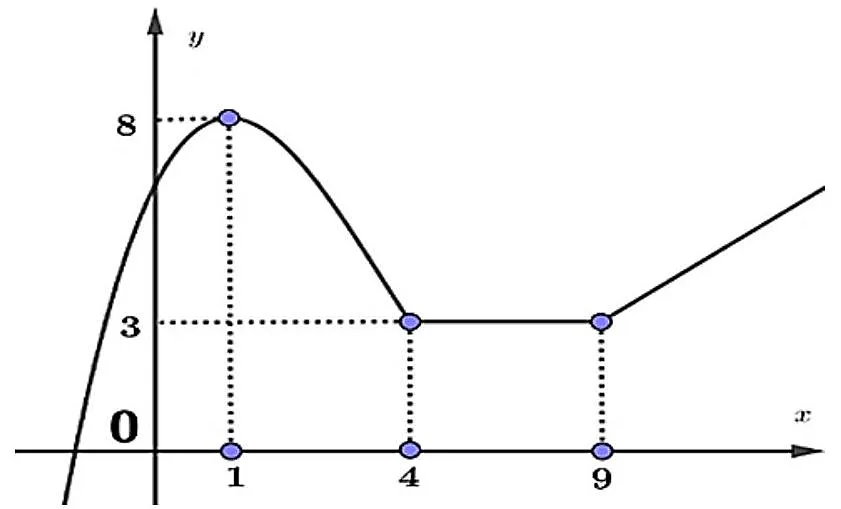
Đáp án: B
Đáp án: D
Đáp án: A
Đáp án: C
Đáp án: B
Giá trị đại diện của nhóm là:
Đáp án: B
Cỡ mẫu của mẫu số liệu là:
Đáp án: C
Giá trị trung bình của mẫu số liệu là:
Đáp án: C