Tạo Trắc Nghiệm

Đề thi tham khảo ĐGNL Đại học Sư phạm TP.Hồ Chí Minh môn Tiếng Anh có đáp án - Đề số 5

80 câu · Đề thi thử ĐGNL chuyên biệt ĐH Sư phạm TP.HCM đầy đủ

5/80 câu đang cập nhật đáp án (ghi rõ ở từng câu), chưa tính điểm; điểm tính trên 75 câu còn lại.

Xem trước: đọc nhanh mọi câu dạng chữ, chưa tính giờ, chưa hiện đáp án.
Luyện tập: chọn đáp án là biết đúng sai ngay, kèm lời giải.
Thi thử: nộp bài mới chấm điểm và hiện lời giải.

Câu 1

A. LISTENING

In this section of the test, you will have an opportunity to demonstrate your ability to understand conversations and talks in English. There are three parts in this section with special directions for each part. Answer all the questions on the basis of what is stated or implied by the speakers in the recording. The recording will be played ONCE only.

Part 1: Question 1-8

In this part, you will hear EIGHT short announcements or instructions. There is one question for each announcement or instruction. For each question, choose the right answer A, B, C or D. First you have some time to look at questions 1 to 8.

When will the consultations be held?    

Đáp án và lời giải

Đáp án: C

Câu 2

What are the tourists asked to do?    

Đáp án và lời giải

Đáp án: D

Câu 3

What is the advertisement for?    

Đáp án và lời giải

Đáp án: C

Câu 4

What advice does the speaker give?    

Đáp án và lời giải

Đáp án: A

Câu 5

What is the purpose of the talk?    

Đáp án và lời giải

Đáp án: B

Câu 6

How long is the orientation?     

Đáp án và lời giải

Đáp án: C

Câu 7

What might customers receive through email?    

Đáp án và lời giải

Đáp án: B

Câu 8

What is happening at 11 a.m this morning?    

Đáp án và lời giải

Đáp án: B

Câu 9

Part 2: Questions 9-20

In this part, you will hear THREE conversations. The conversations will not be repeated. There are four questions for each conversation. For each question, choose the right answer A, B, C or D. You will hear the recording ONCE only.

Part 2: Questions 9-12

Choose the best answer. You will hear the recording ONCE only. First you will have some time to look at question 9 to 12.

What was Robin’s job in Argentina?

Đáp án và lời giải

Đáp án: C

Câu 10

What did Robin buy from the market he visited?    

Đáp án và lời giải

Đáp án: A

Câu 11

How did Robin feel during the dance performance he saw?

Đáp án và lời giải

Đáp án: A

Câu 12

What did Robin like about his favorite place?    

Đáp án và lời giải

Đáp án: C

Câu 13

Part 2: Questions 13-16

Choose the best answer. You will hear the recording ONCE only. First you will have some time to look at question 13 to 16.

Why did Jack go into his yard to take his winning photo?

Đáp án và lời giải

Đáp án: C

Câu 14

How did Jack feel when he first looked at his winning photo?

Đáp án và lời giải

Đáp án: D

Câu 15

Why was Jack surprised by the other photos from the competition?

Đáp án và lời giải

Đáp án: A

Câu 16

What does Jack want to do after winning the competition?

Đáp án và lời giải

Đáp án: D

Câu 17

Part 2: Questions 17-20

Choose the best answer. You will hear the recording ONCE only. First you will have some time to look at question 17 to 20.

What did Rachel do before her children were born?

Đáp án và lời giải

Đáp án: B

Câu 18

Who first thought of doing a show at a party?

Đáp án và lời giải

Đáp án: A

Câu 19

How does Rachel’s neighbor, Lena, help?

Đáp án và lời giải

Đáp án: B

Câu 20

How do Rachel’s daughters help her?

Đáp án và lời giải

Đáp án: C

Câu 21

Part 3: Questions 21-35

In this part, you will hear THREE lectures. The lecture will not be repeated. There are five questions for the lecture. For each question, choose the right answer A, B, C or D. You will hear the recording ONCE only.

Part 3: Questions 21-25

Choose the best answer. You will hear the recording ONCE only. First you will have some time to look at question 21 to 25.

Which play will be performed in the smaller theatre?

Đáp án và lời giải

Đáp án: A

Câu 22

According to the speaker, what is the main advantage of the student card?

Đáp án và lời giải

Đáp án: A

Câu 23

What can be seen at the free exhibition on the ground floor?

Đáp án và lời giải

Đáp án: A

Câu 24

Where is the bookshop located within the Jubilee Arts Centre?    

Đáp án và lời giải

Đáp án: C

Câu 25

Which of the following is true about the dining options?

Đáp án và lời giải

Đáp án: D

Câu 26

Part 3: Questions 26-30

Choose the best answer. You will hear the recording ONCE only. First you will have some time to look at question 26 to 30.

What is the speaker’s main purpose in this talk?

Đáp án và lời giải

Đáp án: B

Câu 27

Why did Lincoln go to Gettysburg in November 1863?

Đáp án và lời giải

Đáp án: C

Câu 28

What can be inferred from Lincoln’s claim that his words would be forgotten?

Đáp án và lời giải

Đáp án: B

Câu 29

What was the central message of Lincoln's two-minute speech?

Đáp án và lời giải

Đáp án: D

Câu 30

What does the conversation at the end reveal about Lincoln?    

Đáp án và lời giải

Đáp án: A

Câu 31

Part 3: Questions 31-35

Choose the best answer. You will hear the recording ONCE only. First you will have some time to look at question 31 to 35.

According to the speaker, what is TRUE about the new Brackenside Pool?

Đáp án và lời giải

Đáp án: C

Câu 32

Why does the speaker mention “older members of the audience”?

Đáp án và lời giải

Đáp án: C

Câu 33

What is the speaker’s response to the concerns about the pool's capacity?

Đáp án và lời giải

Đáp án: C

Câu 34

What does the phrase “on schedule” probably mean in this context?

Đáp án và lời giải

Đáp án: A

Câu 35

What can be inferred about the Central Park Playground?

Đáp án và lời giải

Đáp án: C

Câu 36

B. READING

In this section of the test, you will read FOUR different passages, each followed by 10 questions about it. For questions 1-40, you are to choose the best answer to each question. Answer all questions following a passage on the basis of what is stated or implied in that passage.

You have 60 minutes to answer all the questions.

Passage 1:

       In recent years, there has been growing concern by researchers and indeed the older generation that the younger generation are somewhat disengaged from the news, and as a result have a very narrow view of the world around them. This, however, couldn't be further from the truth, as shown by a recent study carried out by the Media Insight Project (American Press Institute & Associated Press). According to this research, 85% of youngsters say that keeping up to date with the news is important to them, and 69% receive news on a daily basis.

       Perhaps what some of the older generation fail to understand is that just because the younger generation does not buy a daily newspaper, it doesn't mean that they don't follow the news. Born into a digital age, or more specifically the age of the internet, the younger generation simply accesses news through the digital devices they grew up using: laptops, tablets, smartphones, etc. A recent study produced by Ofcom revealed that 60% of youngsters in the UK use the internet or apps for news, compared to just 21% of those in the older age range.

       Social media also plays an important part in consuming the news for the younger generation. It was also revealed that most youngsters actually don't seek out news from social media, but choose to follow it once they see it there. In other words, they encounter it accidentally and therefore following the news is secondary. For example, when accessing social media sites, news headlines automatically appear. These catch the user's eye and consequently the news link is clicked and followed.

       For the moment, social networks are being used selectively, however. For example, social media is used for breaking news, but is not relied on in terms of accuracy. For hard news topics, such as economics or local crime, youngsters continue to look to original sources. For accuracy and reliability, television is still the preferred choice for both generations.

       According to Alison Preston, Head of Media Literacy Research at Ofcom, motivations for following the news also vary according to the generation. In her current report on the topic, she states that, for the younger generation, news is largely about convenience and being social. For the older generation, however, motivation is greatly linked to a sense of duty and habit.

                                                                      (Adapted from Mindset for IELTS 2)

What would be a good title for this passage?

Đáp án và lời giải

Đáp án: A

Câu 37

The word “disengaged” in paragraph 1 is closest in meaning to ______.    

Đáp án và lời giải

Đáp án: B

Câu 38

The word “This” in paragraph 1 refers to ______.

Đáp án và lời giải

Đáp án: B

Câu 39

According to the Media Insight Project, what percentage of young people believe staying updated with news is important?   

Đáp án và lời giải

Đáp án: C

Câu 40

The word “specifically” in paragraph 2 is closest in meaning to ______.    

Đáp án và lời giải

Đáp án: B

Câu 41

The word “these” in paragraph 3 refers to ______.    

Đáp án và lời giải

Đáp án: C

Câu 42

According to the information mentioned in the text, which of the following is TRUE?

Đáp án và lời giải

Đáp án: D

Câu 43

All of the following are mentioned as characteristics of how young people consume news on social media EXCEPT ______.

Đáp án và lời giải

Đáp án: B

Câu 44

According to paragraph 4, which of the following is TRUE about news sources?

Đáp án và lời giải

Đáp án: A

Câu 45

According to Alison Preston, what primarily drives older individuals to stay informed about the news?

Đáp án và lời giải

Đáp án: C

Câu 46

Passage 2:

       The so-called generation gap may be wider than ever, yet it is often misunderstood. Imagine a family dinner where a grandparent complains that young people are constantly on their screens, while a grandchild dismisses the elder as out of touch. Each withdraws into their own assumptions, leaving differences in values, priorities, and life experiences unexplored. Observers frequently attribute this divide to rapid technological acceleration: older people struggle with tools that younger ones learn naturally, and both sides interpret the other's unfamiliarity as evidence of deeper inadequacy.

       Social media has turned what used to be a private issue into a highly visible cultural phenomenon. Viral content often stages conflicts between younger individuals and frustrated older ones, gaining attention by emphasizing generational tension. Older adults are portrayed as lacking technological skills and emotional flexibility, while younger people are labeled as entitled and incapable of sustained effort. Media features and corporate reports amplify these stereotypes, spreading them into boardrooms, classrooms, and policy chambers, where consequential decisions about employment, education, and social provision are made.

       Although the phrase “generation gap” became popular in the 1960s, long before the advent of the digital age, the tendency to view generational differences as fixed and oppositional has grown stronger in recent years. Employers who criticize younger employees for entitlement often ignore their own resistance to change. Studies show that younger people are usually expected to adjust: they must alter how they communicate, lower their expectations, and show gratitude for opportunities that earlier generations received without question. This imbalance is especially clear in performance reviews, where standards of “professionalism” often reflect the preferences of those in senior positions.

       This issue extends beyond simple interpersonal conflict. Superficial solutions such as reverse mentoring or generational training programs are often adopted by organizations eager to signal modernity, yet they fail to challenge deeper power hierarchies. Expecting different generations to get along without creating space for genuine listening is like asking musicians to play together without hearing one another. The potential for meaningful collaboration is wasted, not because the divide cannot be overcome, but because addressing it seriously would require a redistribution of power rather than a superficial rebranding.

       Truly bridging the generation gap through fair systems, open communication, and a willingness to rethink long-held beliefs is essential if families and workplaces are to benefit from the full range of perspectives across different ages.

The phrase “out of touch” in paragraph 1 is closest in meaning to ______.    

Đáp án và lời giải

Đáp án: B

Câu 47

According to the text, how are older adults often portrayed in the media?

Đáp án và lời giải

Đáp án: D

Câu 48

The word “amplify” in paragraph 2 is closest in meaning to ______.    

Đáp án và lời giải

Đáp án: B

Câu 49

Which of the following is NOT mentioned as a consequence of generational stereotypes?

Đáp án và lời giải

Đáp án: C

Câu 50

Which of the following is TRUE about the term “generation gap” according to the passage?

Đáp án và lời giải

Đáp án: A

Câu 51

The word “their” in paragraph 3 refers to ______.    

Đáp án và lời giải

Đáp án: B

Câu 52

What do studies show about the expectations placed on younger people in the workplace?

Đáp án và lời giải

Đáp án: B

Câu 53

Why does the author criticize “reverse mentoring” or “generational training” programs?

Đáp án và lời giải

Đáp án: A

Câu 54

Which of the following can be inferred from the passage?

Đáp án và lời giải

Đáp án: C

Câu 55

What is the author's purpose in writing this article?

Đáp án và lời giải

Đáp án: D

Câu 56

Passage 3:

As the climate crisis worsens, millions of people are being displaced. These people, often called climate migrants or refugees, face serious challenges. Climate change is causing many areas to become less inhabitable. More and more people have to abandon their homes because of sudden disasters like floods or slower changes like rising sea levels. For example, low-lying Pacific countries like Kiribati are at risk of disappearing under the sea. In agricultural areas like sub-Saharan Africa, extreme droughts are taking their toll on food security, leading to massive migrations to more livable areas.

A critical issue for climate migrants is their lack of legal status under international law. Current laws, such as the 1951 Refugee Convention, protect people fleeing war, persecution, or violence, excluding environmental factors. Consequently, climate migrants don’t receive the same protections as traditional refugees. Since large-scale climate immigration is a relatively recent phenomenon, many nations still lack clear policies to address it.

In response, governments and organizations are providing aid and support to climate migrants. Humanitarian groups like the Red Cross are providing food, shelter, and medical care to people displaced by extreme weather events. Some efforts focus on adaptation, which means preparing communities for the effects of climate change. For example, in flood-affected areas, building flood defenses like dams and stronger river banks can allow people to remain in place. Unfortunately, many countries lack the resources to implement these measures effectively.

Some countries, like New Zealand, have initiated small-scale visa programs for victims of extreme weather, but these programs remain rare. Ultimately, global cooperation is vital to mitigate climate change and provide the necessary legal and humanitarian safety nets for those forced to move.

(Adapted from )

The word “inhabitable” in paragraph 1 is closest in meaning to ______.

Đáp án và lời giải

Đáp án: C

Câu 57

According to paragraph 1, how are floods and rising sea levels different as causes of displacement?

Đáp án và lời giải

Đáp án: A

Câu 58

Which of the following is NOT mentioned as a cause of displacement in the passage?

Đáp án và lời giải

Đáp án: D

Câu 59

According to paragraph 2, what is identified as a major challenge for climate migrants?

Đáp án và lời giải

Đáp án: B

Câu 60

The word “it” in paragraph 2 refers to ______.    

Đáp án và lời giải

Đáp án: C

Câu 61

The example of “building flood defenses like dams and stronger river banks” in paragraph 3 serves to illustrate ______.

Đáp án và lời giải

Đáp án: C

Câu 62

The word “these programs” in the final paragraph refers to ______.    

Đáp án và lời giải

Đáp án: B

Câu 63

The word “mitigate” in the final paragraph is closest in meaning to ______.    

Đáp án và lời giải

Đáp án: B

Câu 64

Which statement is TRUE according to the final paragraph?

Đáp án và lời giải

Đáp án: C

Câu 65

What does the passage mainly discuss?

Đáp án và lời giải

Đáp án: C

Câu 66

Passage 4:

         [A] Why is it that many teenagers can stay up late playing computer games yet struggle to wake up on time for school? [B] A recent report warns that today’s youth may be getting dangerously little sleep, putting both their mental and physical well-being at risk. [C] Medical experts indicate that around one in five young people sleep between two and five hours less each night than their parents did at the same age. [D]

         The link between lack of sleep and problems such as lapses in memory, impaired reactions, and reduced concentration is well documented. Studies reveal that even losing just half an hour of sleep per night can significantly affect a child’s performance the following day. Sleep is also especially important during adolescence because this is when the body releases a hormone necessary for rapid growth.

         So why are teenagers not sleeping enough? Some specialists believe that devices like televisions, computers, and mobile phones in bedrooms are partly responsible. As these modern bedtime habits have become more widespread, traditional activities like reading have declined.

         Research also shows that teenagers have different sleep patterns compared to children and adults. One key difference is the timing of melatonin production, the hormone that helps regulate sleep. While adults typically begin producing melatonin around 10 p.m., studies in sleep labs have found that teenagers often do not start until about 1 a.m. This delay may be linked to their nighttime habits, as playing with electronic gadgets late at night stimulates the brain and exposes the teenagers to bright lights which could cause the later release of melatonin.

         Although sleep-related issues – such as how much sleep is needed and when - are often overlooked in efforts to boost academic performance, modern neuroscience suggests schools should reconsider. Experts argue that school schedules should better align with teenagers’ biological rhythms by starting classes later.

(Adapted from Solutions 2nd Edition)

In which space (marked [A], [B], [C], and [D] in the passage) will the following sentence fit?

“This brings up serious concerns about whether insufficient sleep is impacting children’s ability to focus at school.”

Đáp án và lời giải

Đáp án: D

Câu 67

The word “lapses” in paragraph 2 is closest in meaning to _______.    

Đáp án và lời giải

Đáp án: A

Câu 68

The word “this” in paragraph 2 refers to _______.    

Đáp án và lời giải

Đáp án: C

Câu 69

Which of the following best expresses the essential information in the highlighted sentence in paragraph 3?

Đáp án và lời giải

Đáp án: D

Câu 70

The word “this delay” in paragraph 4 refers to _______.

Đáp án và lời giải

Đáp án: A

Câu 71

According to the text, how do electronic gadgets affect a teenager's sleep?

Đáp án và lời giải

Đáp án: C

Câu 72

According to the passage, which of the following is TRUE?

Đáp án và lời giải

Đáp án: C

Câu 73

The word “overlooked” in the final paragraph is closest in meaning to _______.    

Đáp án và lời giải

Đáp án: D

Câu 74

What is the tone of the passage?    

Đáp án và lời giải

Đáp án: A

Câu 75

What could be the best title for this passage?

Đáp án và lời giải

Đáp án: B

Câu 76

Câu tự luận

C. WRITING

In this section of the test, there are TWO writing tasks, with specific directions for each parts. You have 60 minutes to finish the two tasks.

Task 1: You should spend about 20 minutes on this task.

 You received an email from your classmate, Jamie. He is the leader of your group project, and he wants to discuss how the team will work together. Read his email below.

Hi!

I’m writing because we need to start our group project for the Science class. I’ve been thinking about our schedule. When do you think would be the best time for us to meet for our first session?

Also, I’m not sure if we should meet in person at the school library or have a video call online. What do you think are the pros and cons of each, and which one should we choose?

Lastly, do you have any ideas on how we should divide the work, so everyone stays involved?

Best,

Jamie

Write an email to reply to Jamie and:

·      Suggest a specific time and day for the first meeting.

·      Compare the two meeting options (in-person vs. online) and recommend one.

·      Suggest a way to divide the tasks among group members.

You should write at least 120 words. DO NOT include your name or addresses. Your response will be evaluated in terms of Task Fulfillment, Organization, Vocabulary, and Grammar.

Đáp án tham khảo

Lời giải của đề gốc để bạn tự đối chiếu; câu tự luận không tính điểm.

Sample answer:

Dear Jamie,

I hope you’re having a great week. It’s exciting that we are starting our Science project! Regarding our first meeting, I suggest meeting this Friday at 4:00 PM after school because everyone will probably be available then.

As for the meeting format, both in-person and online meetings have their advantages. Meeting at the library can help us focus better and discuss ideas more easily, while a video call is more convenient and saves travel time. However, since this is our first meeting and we need to brainstorm ideas together, I think meeting at the library would be the better choice.

To make sure everyone participates, we could divide the tasks based on our strengths. For example, one person could do the research, another could prepare the presentation slides, and the third person could write the final report. This would make the work more balanced and organized.

I’m looking forward to seeing everyone soon!

Best,

A

Bản dịch:

Chào Jamie,

Hy vọng cậu đang có một tuần tuyệt vời. Thật hào hứng khi chúng ta bắt đầu dự án Khoa học này! Về buổi họp đầu tiên, tớ đề xuất gặp nhau vào thứ Sáu tuần này lúc 4 giờ chiều sau giờ học, vì có lẽ lúc đó mọi người đều rảnh.

Về hình thức họp, cả họp trực tiếp và trực tuyến đều có những ưu điểm riêng. Họp tại thư viện có thể giúp chúng ta tập trung hơn và thảo luận các ý tưởng dễ dàng hơn, trong khi gọi video thì thuận tiện hơn và tiết kiệm được thời gian đi lại. Tuy nhiên, vì đây là buổi họp đầu tiên và chúng ta cần cùng nhau lên ý tưởng, tớ nghĩ gặp nhau ở thư viện sẽ là lựa chọn tốt hơn.

Để đảm bảo mọi người đều tham gia, chúng ta có thể chia nhỏ các nhiệm vụ dựa trên thế mạnh của mỗi người. Ví dụ, một người có thể làm nghiên cứu, một người khác chuẩn bị các trang thuyết trình, và người thứ ba có thể viết báo cáo cuối cùng. Việc này sẽ giúp công việc cân bằng và có tổ chức hơn.

Tớ rất mong sớm được gặp mọi người!

Thân ái,

A

Câu 77

Câu tự luận

Task 2: You should spend about 40 minutes on this task.

Read the following topic.

Some people believe that social networking sites have a positive impact on the way people communicate. Others argue that these platforms are making our social lives worse and increasing isolation.

Write an essay to express your point of view.

Đáp án tham khảo

Lời giải của đề gốc để bạn tự đối chiếu; câu tự luận không tính điểm.

Some people believe that social networking sites have a positive impact on the way people communicate. Others argue that these platforms are making our social lives worse and increasing isolation. (Một số người tin rằng các trang mạng xã hội có tác động tích cực đến cách con người giao tiếp. Những người khác lại lập luận rằng các nền tảng này đang làm cho đời sống xã hội của chúng ta trở nên tồi tệ hơn và gia tăng sự cô lập.)

Sample answer:

In recent years, social networking sites have become an integral part of people’s daily communication and social interaction. While some people believe social media enhances connectivity, others argue that it contributes to social isolation. In my opinion, although social media offers great convenience, it often diminishes the quality of real-life interactions.

On the one hand, social networking platforms have revolutionized the way we interact. Applications such as Facebook or Zalo enable people to maintain constant contact with friends and family, bridging the gap created by geographical distance. Additionally, these platforms allow users to exchange information rapidly and foster online communities based on shared interests, which can be particularly beneficial for those in remote areas.

On the other hand, I believe that the excessive reliance on social media can have a detrimental effect on genuine human interaction. Many individuals now spend a significant amount of time scrolling through digital feeds instead of engaging in meaningful, face-to-face conversations. Consequently, these virtual connections often become superficial, lacking the emotional depth of physical presence. Furthermore, the habit of comparing one's own life with the curated and idealized versions of others online can lead to increased stress, loneliness, and a decline in self-esteem.

In conclusion, while social networking sites are undoubtedly powerful communication tools, they should be used with moderation. Striking a healthy balance between digital engagement and real-life interaction is crucial to preserving the depth and sincerity of our social bonds.

Bản dịch:

Trong những năm gần đây, các trang mạng xã hội đã trở thành một phần quan trọng trong giao tiếp và tương tác xã hội hàng ngày của con người. Trong khi một số người tin rằng mạng xã hội tăng cường khả năng kết nối, những người khác lại lập luận rằng nó góp phần gây ra sự cô lập xã hội. Theo quan điểm của tôi, mặc dù mạng xã hội mang lại sự tiện lợi to lớn, nhưng nó thường làm giảm chất lượng của các tương tác trong đời thực.

Về một mặt, các nền tảng mạng xã hội đã cách mạng hóa cách chúng ta tương tác. Các ứng dụng như Facebook hay Zalo cho phép mọi người duy trì liên lạc thường xuyên với bạn bè và gia đình, xóa tan khoảng cách về mặt địa lý. Thêm vào đó, các nền tảng này cho phép người dùng trao đổi thông tin nhanh chóng và thúc đẩy các cộng đồng trực tuyến dựa trên sở thích chung, điều này đặc biệt có lợi cho những người ở vùng sâu vùng xa.

Về mặt khác, tôi tin rằng việc phụ thuộc quá mức vào mạng xã hội có thể gây ra tác động tiêu cực đến sự tương tác thực sự giữa người với người. Nhiều cá nhân hiện nay dành một lượng thời gian đáng kể để lướt các bảng tin kỹ thuật số thay vì tham gia vào các cuộc trò chuyện trực tiếp có ý nghĩa. Hệ quả là, những kết nối ảo này thường trở nên hời hợt, thiếu đi chiều sâu cảm xúc của sự hiện diện trực tiếp. Hơn nữa, thói quen so sánh cuộc sống của chính mình với những phiên bản được cắt tỉa và lý tưởng hóa của người khác trên mạng có thể dẫn đến gia tăng căng thẳng, cô đơn và suy giảm lòng tự trọng.

Tóm lại, mặc dù các trang mạng xã hội chắc chắn là công cụ giao tiếp mạnh mẽ, chúng nên được sử dụng một cách điều độ. Việc thiết lập một sự cân bằng lành mạnh giữa việc tham gia vào thế giới kỹ thuật số và tương tác thực tế là vô cùng quan trọng để gìn giữ chiều sâu và sự chân thành trong các mối quan hệ xã hội của chúng ta.

Câu 78

Câu tự luận

D. SPEAKING

PART ONE: SOCIAL INTERACTIONS

Let’s talk about Technology and Social Media

1. How much time do you spend on social media every day?

2. Do you think using social media is a good way to make new friends? Why or why not?

3. Should parents limit the time their children spend on the Internet?

Let’s talk about Festivals and Holidays

1. What is your favorite festival in your country?

2. Do you prefer spending holidays with your family or with your friends? Why?

3. Should schools give students more days off during traditional festivals?

Đáp án tham khảo

Lời giải của đề gốc để bạn tự đối chiếu; câu tự luận không tính điểm.

Let’s talk about Technology and Social Media

1. How much time do you spend on social media every day? ((Bạn dành bao nhiêu thời gian cho mạng xã hội mỗi ngày?))

Sample answer: I usually spend about two hours a day on social media. I mostly use it in the evening to relax and check messages from my friends.

Bản dịch: Tôi thường dành khoảng hai tiếng mỗi ngày cho mạng xã hội. Tôi chủ yếu dùng vào buổi tối để thư giãn và kiểm tra tin nhắn từ bạn bè.

2. Do you think using social media is a good way to make new friends? Why? ((Bạn có nghĩ dùng mạng xã hội là cách tốt để kết bạn mới không? Tại sao?))

Sample answer: Yes, it is a convenient tool because we can connect with people who have similar hobbies. However, we must be careful to protect our personal information from strangers.

Bản dịch: Có, đó là một công cụ tiện lợi vì chúng ta có thể kết nối với những người có cùng sở thích. Tuy nhiên, chúng ta phải cẩn thận bảo vệ thông tin cá nhân khỏi người lạ.

3. Should parents limit the time their children spend on the Internet? (Cha mẹ có nên giới hạn thời gian con cái sử dụng Internet không?))

Sample answer: I definitely think so. Excessive Internet use can distract students from their studies and affect their physical health, such as causing eye strain.

Bản dịch: Tôi chắc chắn là có. Sử dụng Internet quá nhiều có thể làm học sinh xao nhãng việc học và ảnh hưởng đến sức khỏe thể chất, ví dụ như gây mỏi mắt.

Let’s talk about Festivals and Holidays

1. What is your favorite festival in your country? ((Lễ hội yêu thích của bạn ở đất nước mình là gì?)

Sample answer: My favorite is the Tet holiday. It is the most important traditional festival in Vietnam where families gather and enjoy special traditional food together.

Bản dịch: Lễ hội yêu thích của tôi là Tết Nguyên Đán. Đây là lễ hội truyền thống quan trọng nhất ở Việt Nam, nơi các gia đình đoàn tụ và cùng nhau thưởng thức những món ăn truyền thống đặc biệt.

2. Do you prefer spending holidays with your family or with your friends? Why? ((Bạn thích dành kỳ nghỉ với gia đình hay bạn bè hơn? Tại sao?)

Sample answer: I prefer spending my holidays with my family. Since I stay at school all day, holidays are a precious time for me to bond with my parents and siblings.

Bản dịch: Tôi thích dành kỳ nghỉ với gia đình hơn. Vì tôi ở trường cả ngày, nên các kỳ nghỉ là thời gian quý giá để tôi gắn kết với bố mẹ và anh chị em.

3. Should schools give students more days off during traditional festivals? ((Trường học có nên cho học sinh nghỉ thêm ngày vào các dịp lễ truyền thống không?)

Sample answer: Yes, because it gives students more time to learn about cultural traditions and participate in local celebrations with their families.

Bản dịch: Có, vì điều đó giúp học sinh có thêm thời gian tìm hiểu về các truyền thống văn hóa và tham gia vào các hoạt động kỷ niệm tại địa phương cùng gia đình.

Câu 79

Câu tự luận

PART TWO: SOLUTION DISCUSSION

Situation:

A group of high school students is planning their end-of-year trip to relax after the final exam. They are considering three destinations:

- A “Camping Trip” in a national park: Connecting with nature and participating in outdoor activities.

- A “Beach Resort”: Enjoying luxury services, swimming, and relaxing by the sea.

- A “City Tour” to a historic city: Visiting museums, landmarks, and learning about history.

Which do you think is the best option for a group of students? Why?

Đáp án tham khảo

Lời giải của đề gốc để bạn tự đối chiếu; câu tự luận không tính điểm.

Sample answer:

Among the three suggested options, I believe that a Camping Trip in a national park is the best choice for high school students.

There are several reasons for this. Firstly, camping is very budget-friendly, which is suitable for students who do not have much money. Secondly, it is a great way to connect with nature. After a long semester of hard work, staying outdoors and breathing fresh air can help us reduce stress effectively. Finally, a camping trip encourages teamwork. Activities like pitching tents or cooking over a campfire will help us become closer before the school year ends.

In conclusion, while a beach resort is comfortable and a city tour is informative, I still think a camping trip provides the most meaningful and fun experience for our group.

Bản dịch:

Trong ba phương án được đề xuất, tôi tin rằng một chuyến cắm trại tại vườn quốc gia là lựa chọn tốt nhất cho học sinh cấp 3.

Có một vài lý do cho việc này. Thứ nhất, đi cắm trại rất tiết kiệm chi phí, phù hợp với những học sinh không có nhiều tiền. Thứ hai, đây là cách tuyệt vời để kết nối với thiên nhiên. Sau một học kỳ làm việc vất vả, việc ở ngoài trời và hít thở không khí trong lành có thể giúp chúng tôi giảm căng thẳng hiệu quả. Cuối cùng, một chuyến cắm trại khuyến khích tinh thần làm việc nhóm. Các hoạt động như dựng lều hay nấu ăn bên lửa trại sẽ giúp chúng tôi trở nên thân thiết hơn trước khi năm học kết thúc.

Tóm lại, mặc dù nghỉ dưỡng ở biển rất thoải mái và tham quan thành phố cung cấp nhiều thông tin, tôi vẫn nghĩ một chuyến cắm trại mang lại trải nghiệm ý nghĩa và vui vẻ nhất cho nhóm chúng tôi.

Câu 80

Câu tự luận

PART THREE: TOPIC DEVELOPMENT

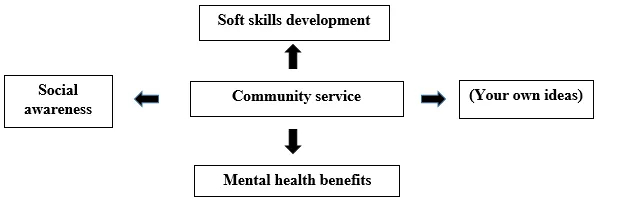
TOPIC: Participating in community service is beneficial for high school students.

PART THREE: TOPIC DEVELOPMENT  TOPIC: Participating in community service is beneficial for high school students. (ảnh 1)

Follow-up questions:

1. Do you think community service should be a mandatory subject in high schools? Why?

2. How can schools encourage students who are shy or unmotivated to join volunteer activities?

Đáp án tham khảo

Lời giải của đề gốc để bạn tự đối chiếu; câu tự luận không tính điểm.

Topic: Participating in community service is beneficial for high school students. (Tham gia hoạt động cộng đồng mang lại lợi ích cho học sinh cấp 3)

Sample answer:

I strongly believe that participating in community service offers numerous significant benefits for high school students.

Firstly, it promotes soft skills development, such as teamwork, communication, and leadership. By organizing charity events or working in groups, students can learn how to interact effectively with others. Secondly, volunteering enhances social awareness. It provides students with a chance to witness real-life challenges, helping them develop empathy and a deeper understanding of the world around them. Lastly, community service provides great mental health benefits. Helping those in need often gives students a sense of purpose and fulfillment, which can effectively reduce the stress of their heavy schoolwork. In my own experience, I also found that volunteering is a great way to make new friends who share the same passions.

In conclusion, community service is not only a way to give back to society but also a vital part of personal growth for every student.

Bản dịch:

Tôi tin mạnh mẽ rằng việc tham gia hoạt động cộng đồng mang lại nhiều lợi ích to lớn cho học sinh cấp 3.

Thứ nhất, nó thúc đẩy việc phát triển kỹ năng mềm, như là làm việc nhóm, giao tiếp và lãnh đạo. Thông qua việc tổ chức các sự kiện từ thiện hay làm việc nhóm, học sinh có thể học cách tương tác hiệu quả với người khác. Thứ hai, làm tình nguyện nâng cao nhận thức xã hội. Nó mang lại cho học sinh cơ hội chứng kiến những thử thách trong thực tế, giúp các em phát triển sự thấu cảm và hiểu biết sâu sắc hơn về thế giới xung quanh. Cuối cùng, dịch vụ cộng đồng mang lại lợi ích lớn cho sức khỏe tinh thần. Việc giúp đỡ những người khó khăn thường mang lại cho học sinh cảm giác về mục đích sống và sự mãn nguyện, điều này giúp giảm bớt căng thẳng từ việc học tập nặng nề một cách hiệu quả. Theo kinh nghiệm của bản thân, tôi cũng thấy rằng làm tình nguyện là một cách tuyệt vời để kết thêm những người bạn mới có cùng đam mê.

Tóm lại, hoạt động cộng đồng không chỉ là cách để đóng góp cho xã hội mà còn là một phần thiết yếu trong sự phát triển cá nhân của mỗi học sinh.

Follow-up questions:

1. Do you think community service should be a mandatory subject in high schools? Why? (Bạn có nghĩ hoạt động cộng đồng nên là một môn học bắt buộc ở trường cấp 3 không? Tại sao?)

Sample answer:

I personally believe that community service should be mandatory in high schools. Making it a requirement ensures that all students have the opportunity to develop social responsibility and essential life skills that are not taught in textbooks. However, instead of grading it like math or science, schools should focus on the quality of contribution. This approach helps students understand the value of giving back to society without feeling too much academic pressure.

Bản dịch:

Cá nhân tôi tin rằng hoạt động cộng đồng nên là bắt buộc ở các trường cấp 3. Việc đưa nó thành một yêu cầu bắt buộc đảm bảo rằng tất cả học sinh đều có cơ hội phát triển trách nhiệm xã hội và các kỹ năng sống thiết yếu vốn không được dạy trong sách giáo khoa. Tuy nhiên, thay vì chấm điểm như môn toán hay khoa học, nhà trường nên tập trung vào chất lượng đóng góp. Cách tiếp cận này giúp học sinh hiểu được giá trị của việc đóng góp cho xã hội mà không cảm thấy quá áp lực về mặt học tập.

2. How can schools encourage students who are shy or unmotivated to join volunteer activities? (Làm thế nào trường học có thể khuyến khích những học sinh nhút nhát hoặc thiếu động lực tham gia các hoạt động tình nguyện?)

Sample answer:

There are several ways schools can support these students. For shy individuals, schools can organize small-group tasks or pair them with supportive mentors to help them feel more confident. For those who lack motivation, schools should recognize their efforts through awards, certificates, or extra credit. Most importantly, creating a variety of projects, from environmental cleanup to teaching kids, allows students to find a cause they truly care about, which naturally boosts their interest.

Bản dịch:

Có một vài cách mà nhà trường có thể hỗ trợ những học sinh này. Đối với những bạn nhút nhát, trường có thể tổ chức các nhiệm vụ theo nhóm nhỏ hoặc ghép cặp các em với những người hướng dẫn nhiệt tình để giúp các em cảm thấy tự tin hơn. Đối với những bạn thiếu động lực, nhà trường nên ghi nhận nỗ lực của các em thông qua các giải thưởng, giấy chứng nhận hoặc cộng điểm rèn luyện. Quan trọng nhất là việc tạo ra đa dạng các dự án, từ dọn dẹp môi trường đến dạy học cho trẻ nhỏ, sẽ cho phép học sinh tìm thấy một mục tiêu mà các em thực sự quan tâm, từ đó thúc đẩy sự hứng thú một cách tự nhiên.