Câu 1
Which word has the underlined part pronounced differently from that of the others?
Đáp án và lời giải
Đáp án: D
Which word has the underlined part pronounced differently from that of the others?
Đáp án: D
Which word has the underlined part pronounced differently from that of the others?
Đáp án: C
Which word has a different stress pattern from that of the others?
Đáp án: C
Which word has a different stress pattern from that of the others?
Đáp án: D
“Let's congratulate Nam _______ his excellent academic achievement,” said the teacher.
Đáp án: C
Our school celebrated Children's Day ________ June 1st two weeks ago.
Đáp án: A
- Nam: “Have you ever enjoyed Tet, Maryam?"
- Maryam: "You mean the Lunar New Year? I once had a chance to be in Vietnam then, _______ I really liked it”
Đáp án: B
- Bao: “Did you follow SEA GAMES 31, ______ held in Vietnam from May 12th to 23rd, 2022?”
- Minh: “Of course. Viet Nam won over 200 gold medals.”
Đáp án: B
- Mark: “Viewers from the rural areas can get access to cable television, can't they?"
- An: " Yes, there is _______ local and international programs on different TV channels.”
Đáp án: C
Our teacher suggests ________ waste paper for the school's recycling scheme.
Đáp án: A
- Daisy: "What is your favorite place to ______?”
- Luey: "Lemongrass Restaurant."
Đáp án: B
Farmers use animal dung to _______ their fields.
Đáp án: B
- Thanh: "Why don't you reduce the amount of water your family uses?"
- Nga: “_______”
Đáp án: A
- Chinh: “Congratulations! You scored a superb goal for our team.”
- Tung: “_______”
Đáp án: B
What does the sign tell you to do?
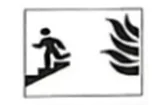
Đáp án: D
What does the sign mean?
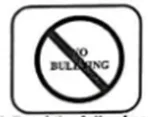
Đáp án: B
Read the following passage. Decide if the statements from 17 to 20 are True or False, and choose the correct answers (A. B, C or D) for questions 21 and 22.
Where did your water come from before it arrived in your kitchen? Is your glass of water as new as this morning or as old as the dinosaurs? Is it even older than the dinosaurs? Water on Earth is always moving round and round, like a wheel turning. This is called “the water cycle," and it has no beginning or end. But to talk about it, we must choose a place to begin. We will start with the oceans, the largest bodies of water on Earth.
In this part of the cycle, the sun heats the Water In the oceans, and then the warm water evaporates into the air. The water In the air eventually comes together to form very large clouds. Wind then moves the clouds over the land. When clouds finally meet cold air, the water comes down in the form of rain or snow.
Some of this rainwater will stay on the land, but most of the water goes down into rivers and streams. Finally, it goes back to the oceans, where the cycle begins again.
The water cycle is billions of years old. So, think again about how old that water in your cup is. It’s much, much older than you thought.
The oceans are the largest bodies of water on Earth.
Đáp án: A
The water cycle is compared to a wheel turning.
Đáp án: A
When you look at clouds, you are seeing the beginning part of the water cycle.
Đáp án: A
Water is made new every day.
Đáp án: A
Which of the following may be the best title for the reading passage?.
Đáp án: C
In the reading passage, all of the following are mentioned EXCEPT.
Đáp án: B
Đáp án: C
Đáp án: B
Đáp án: A
Đáp án: D
Đáp án: D
Đáp án: A
Her father learned that the house was for sale through an __________(advertise)
Đáp án: A
Physical exercise is __________to our health. (benefit)
Đáp án: A
In the speaking examination, answers are presented _______on tape. (oral)
Đáp án: A
She's just had an article __________in the Tuoi Tre. (publish)
Đáp án: A
Tsunamis is a natural _________that can cause great damage. (disastrous)
Đáp án: A
I like watching the news on TV every day because its very __________(inform)
Đáp án: A
Rearrange the groups of words in the correct order to make complete sentences.
Most students tried / Entrance exam / to concentrate / for the coming / on studying /.//
Đáp án: A
Global warming / that happens / over many, many years / is a slow change /.//
Đáp án: A
Finish each of the following sentences in such a way that ít means almost the same as the sentence printed before it.
How long have you been learning English?
-> When did ________________________________
Đáp án: A
The students spent ten minutes waiting for their bus.
-> It took __________________________________
Đáp án: A
My uncle will send for a mechanic to fix his car tomorrow.
-> My uncle will have his _____________________
Đáp án: A
“What about teaching the children how to cope with an emergency?" said Mrs Thu.
-> Mrs Thu suggested that the children ___________
Đáp án: A